


The advantages of RF
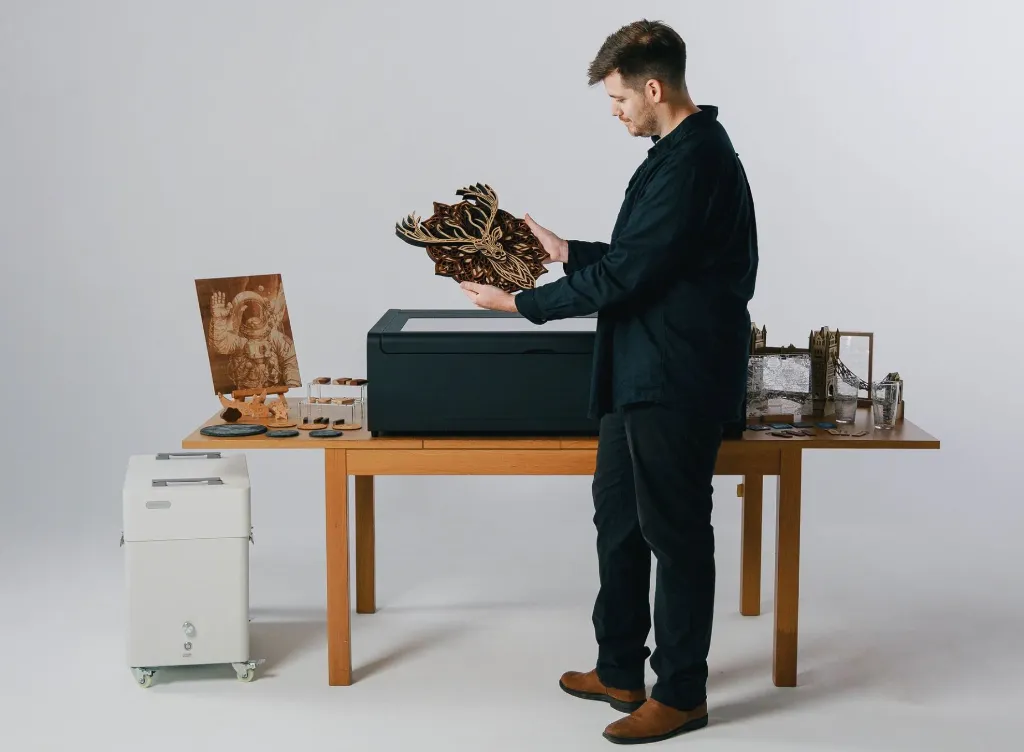
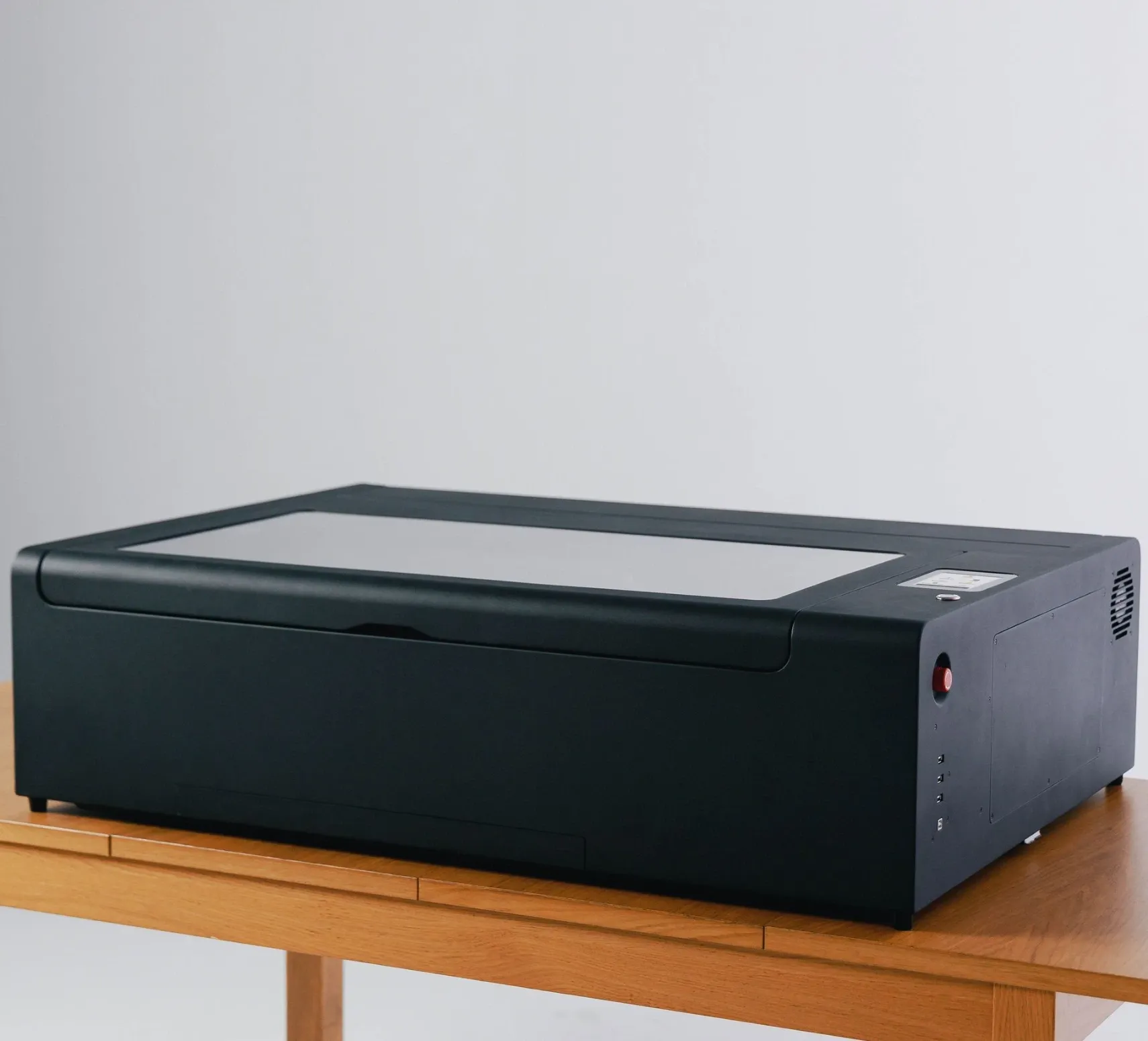
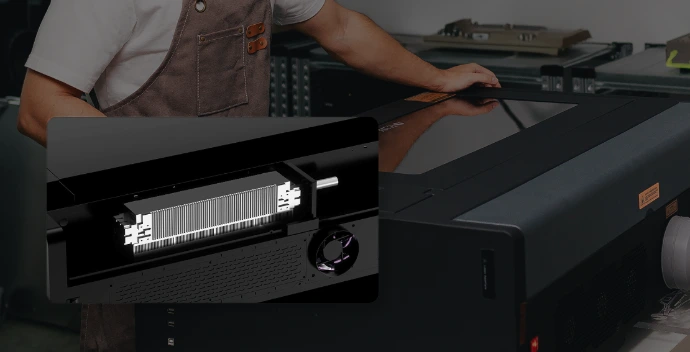
The Flux Hexa RF 30W CO2 laser uses radio frequency energy to generate the laser beam in a sealed metal tube. An RF laser is air-cooled. It is faster, works finer, and is more durable than a water-cooled CO2 laser in a glass tube. The Hexa RF is available in 30W, 60W, and 80W. The Hexa RF laser is a CO2 laser and can therefore also cut acrylic.
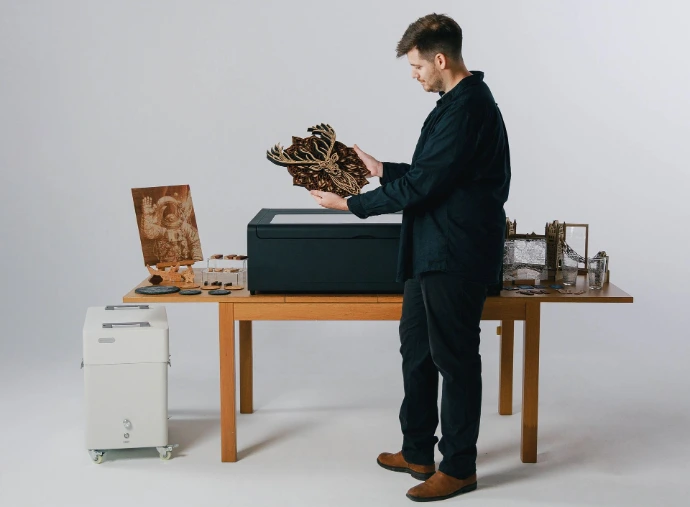
Why choose HEXA RF?
HEXA RF combines the precision and durability of an RF CO₂ laser source with the large working area and production features of the FLUX HEXA series.
- 20,000 hours stable performance
- Stunning details: 2000 DPI
- An incredibly fine beam 0.07 mm
- Faster than ever: 2,000 mm/s
Specifications
- Laser power: 30W / 60W / 80W (RF CO₂ tube)
- Laser wavelength 10.640 nm
- Safety classification Class 1 (IEC 60825-1)
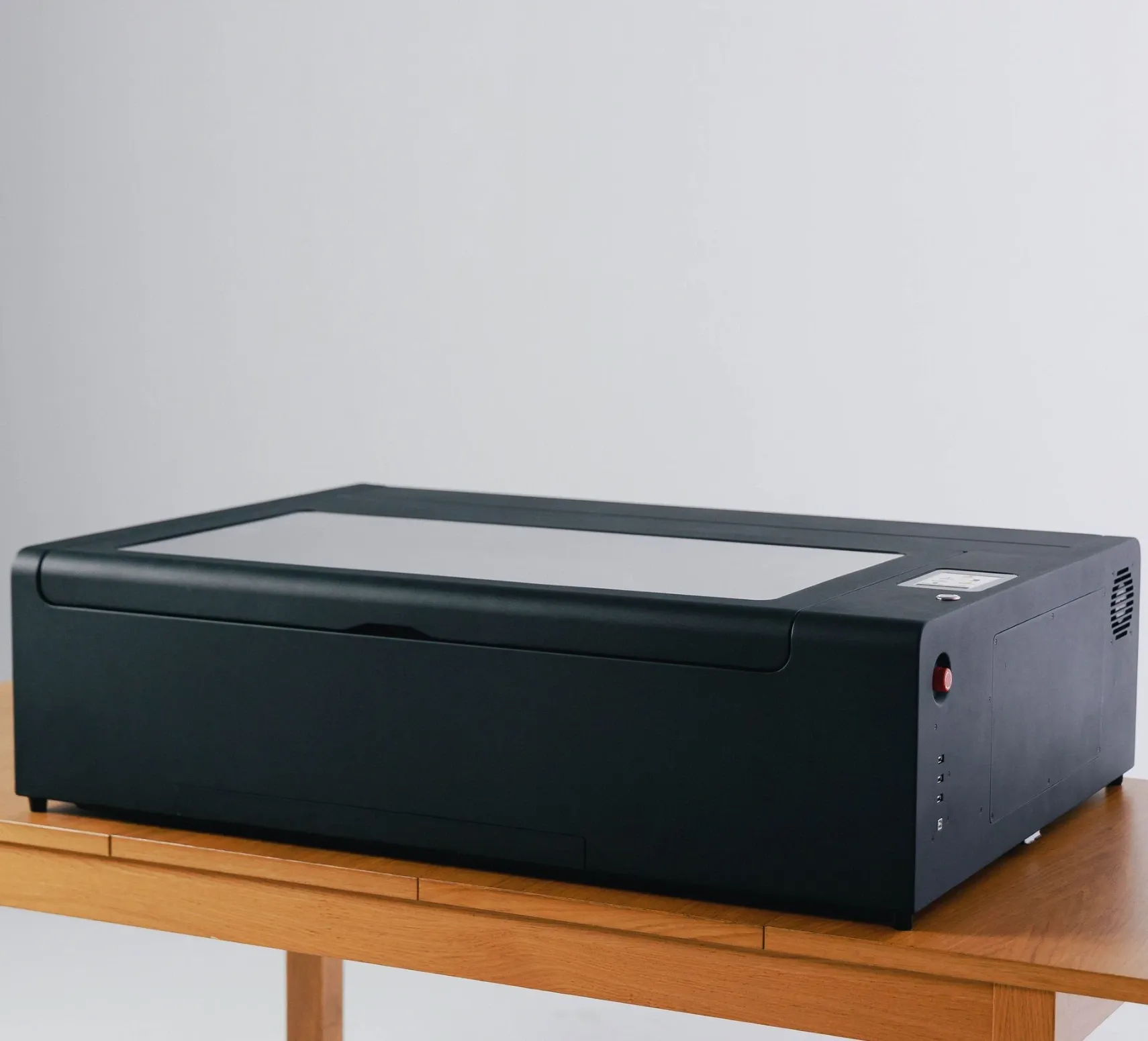
- Product dimensions (LxWxH) 1110 x 811 x 317 mm
- Product weight 30W: 72 kg
- Product weight 60W: 74 kg
- Product weight 80W: 77 kg
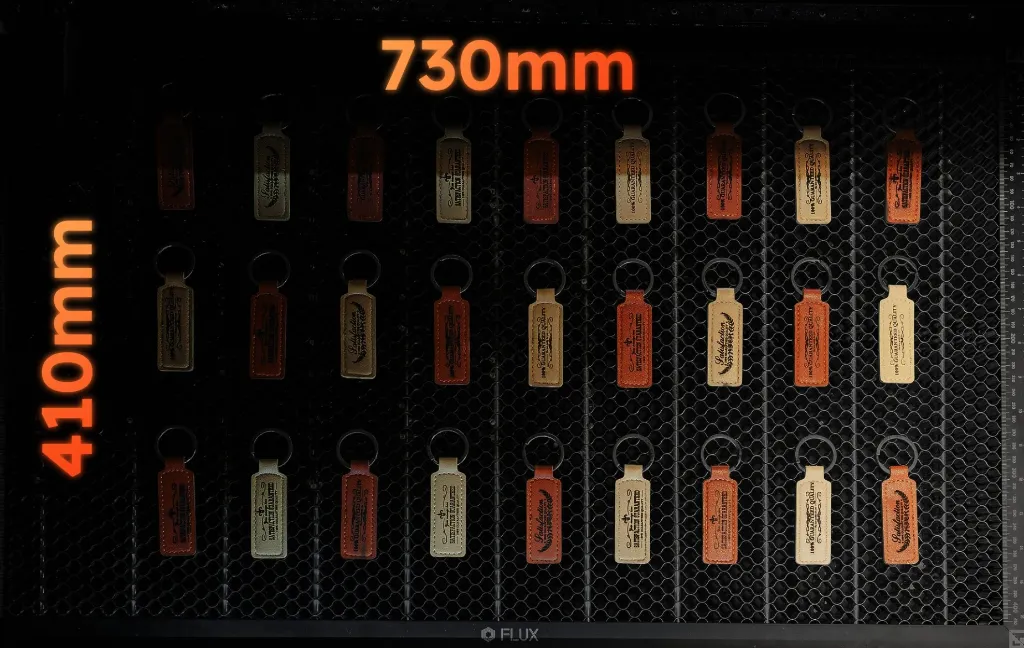
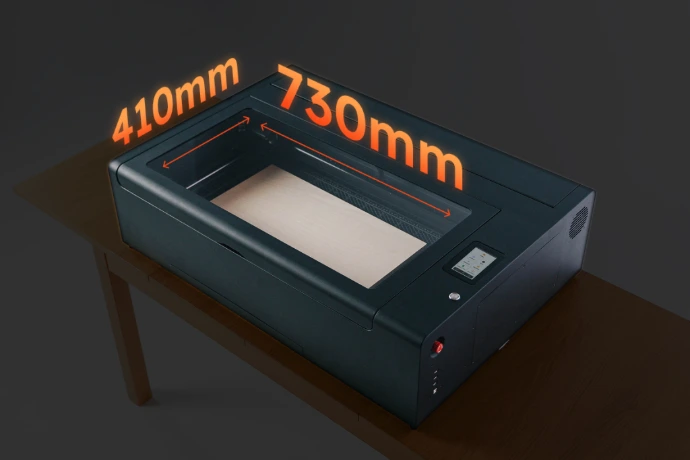
- Working area 730 x 410 mm
- Laser resolution 2000 DPI
- Maximum engraving speed 2000 mm/s
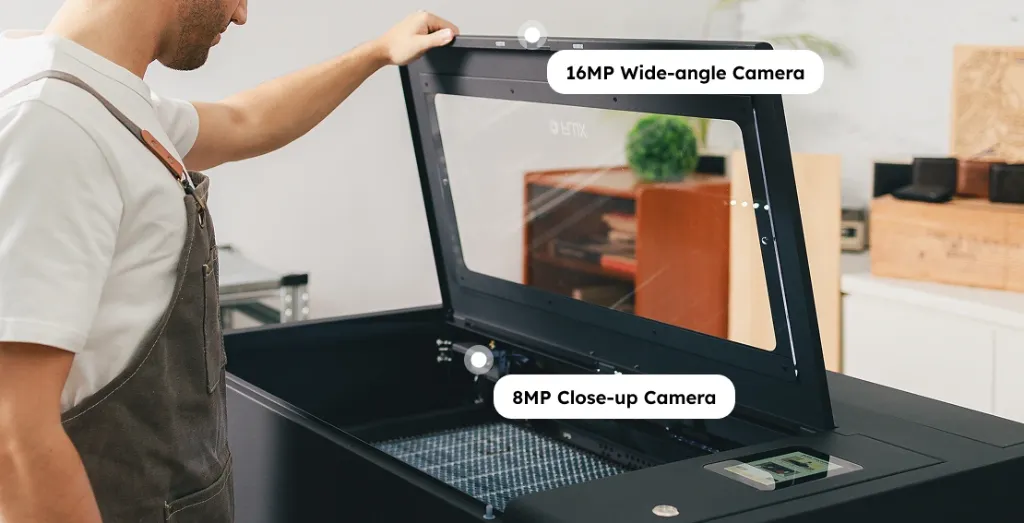
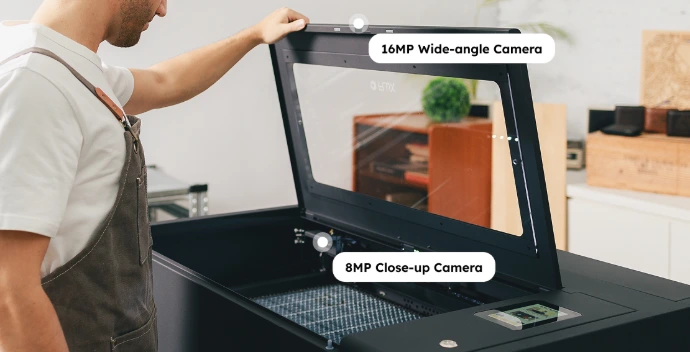
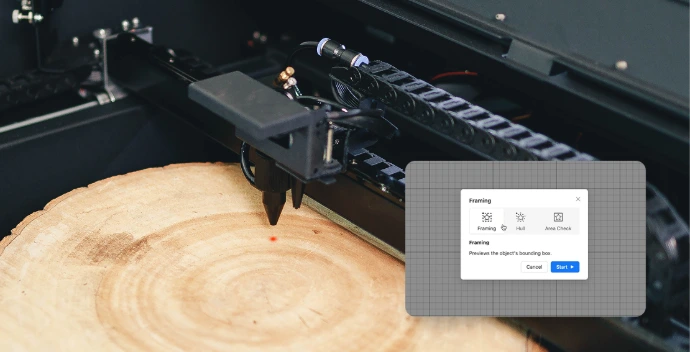
- Laser alignment Camera preview / Red light preview
- Camera resolution HD 16MP (wide) + HD 8MP (close-up)
- Autofocus Built-in
- Air support 30 LPM
- Exhaust fan 250 CFM
- Operating temperature 5 – 30 °C
- Power supply AC 110V / 220V
Software
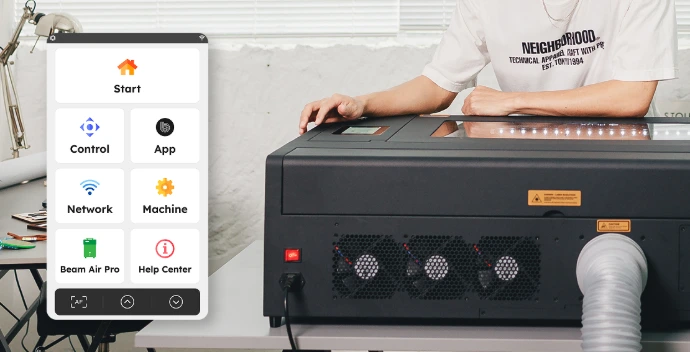
- Control software Beam Studio / LightBurn (built-in)
- OS: Windows / macOS / Linux / ChromeOS /
- iOS / iPadOS / Android
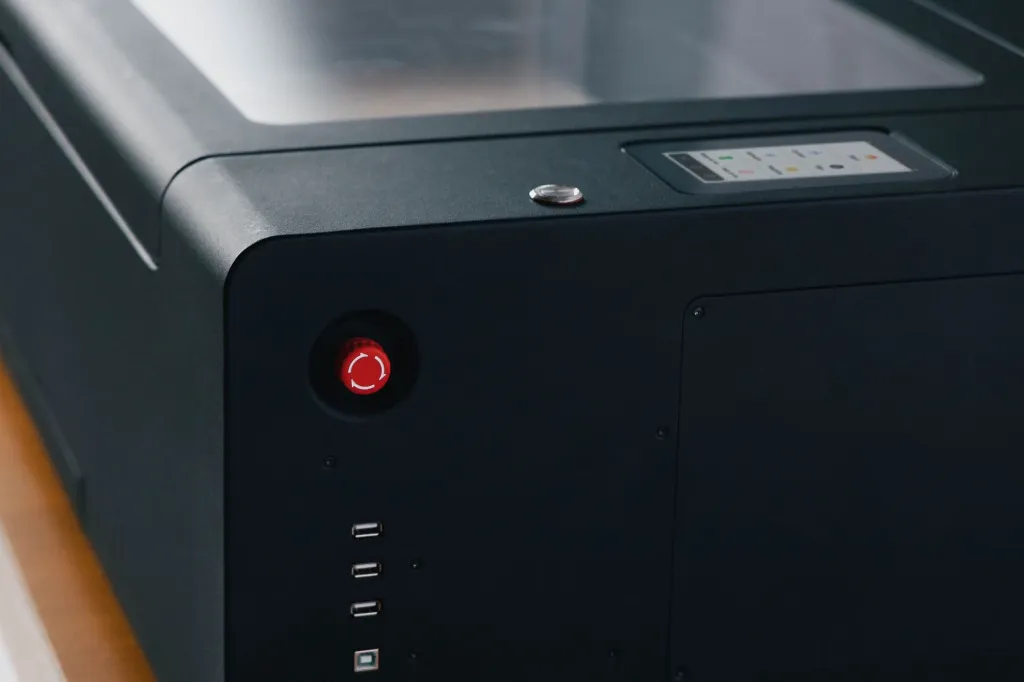
- I/O Port USB-A x 3 / USB-B x 1
- Connectivity Wi-Fi / USB / Ethernet (by USB Adaptor) /
- Direct Network Cable (by USB Adaptor)
- Control: Computer / Mobile / Tablet
- File Type JPG / PNG / SVG / DXF / AI / PDF
RF CO₂ laser vs. glass tube: what makes the HEXA RF different?
Most CO₂ laser cutters use a glass laser tube or an RF metal tube. Both can cut and engrave non-metal materials, but they differ significantly in maintenance, precision, speed, and lifespan.
The main differences lie in precision, maintenance and long-term performance.
CO₂ lasers with glass tube: lower acquisition costs, suitable for general cutting work.
RF CO₂ lasers: finer engravings, faster pulse control, air cooling and longer lifespan of the tube.
FLUX HEXA RF: a professional RF CO₂ laser for detailed engraving and large volume production.
What is an RF CO₂ laser?
An RF CO₂ laser uses radio frequency energy to generate the laser beam in a sealed metal tube.
What does that mean in practice?
Finer control: fast laser pulses result in sharper lines and more detailed engravings.
Less maintenance: air cooling makes regular coolant replacement unnecessary.
Longer lifespan: RF metal tubes generally last longer and can be refilled as power decreases.
Familiar applications: it processes the usual CO₂ laser materials such as wood, acrylic, leather, paper, fabric, rubber, glass and stone.
RF vs. glass tube: what is the difference?
- Less maintenance on the cooling system
HEXA RF uses integrated air cooling, so you don't need to:
- Refresh the cooling water
- Monitor the coolant quality
- Maintain an external water cooler
- Worry that poor water circulation will damage the tube
2. Up to 20,000 hours lifespan of the tube
The metal laser tube of the HEXA RF has an estimated lifespan of up to 20,000 operating hours.
When the power eventually decreases:
- The tube can be refilled.
- Does not necessarily need to be completely discarded.
- Companies limit downtime by frequent tube replacement.
- The actual lifespan depends on usage, power, environment and maintenance.
3. up to 2,000 DPI
HEXA RF is designed for work that requires small details and consistent results:
- Laser spot of just 0.07 mm
- Resolution up to 2,000 DPI
- Readable small text and sharp fine lines
- Detailed greyscale images
- Consistent results in mass production
4. Speeds up to 2,000 mm/s
A higher engraving speed helps companies to:
- Batch orders to be completed faster
- To reduce the production time per piece
- To be able to handle larger order volumes
- To maintain detailed results at higher throughput.
5. Large working area for production
The working area of 730 × 410 mm allows for:
- Processing larger designs
- Placing multiple products in one task
- Limiting repeated setup and alignment
- Making boards, packaging, displays and personalised products more efficient
6. Can an RF CO₂ laser cut metal?
No. The term "metal tube" describes the construction of the laser source. HEXA RF is primarily designed to cut and engrave non-metallic materials. It can engrave certain coated or anodised metals, but does not cut metal directly.
7. Is an RF laser better than a glass tube laser?
An RF laser is generally better for detailed engraving, frequent production, less maintenance on the cooling system and a longer lifespan of the tube. A glass tube laser may be more suitable when lower acquisition costs are the main priority.